
🧭 Immutable vs Mutable Data in JavaScript — The Hidden Source of Bugs You Don’t Notice
Why small mutations can break big applications — and how immutability keeps your state clean, predictable, and easy to debug.

✅ 1. Why Mutation Is Dangerous (Even When It Works)
One of the easiest ways to break your JavaScript app is by mutating data you didn’t mean to change.
It might seem harmless at first:
const user = { name: ‘Alex’, age: 28 };
const updatedUser = user;
updatedUser.age = 29;

console.log(user.age); // 👉 29 😱
You changed updatedUser.age — but the original user object also changed.
Because both variables point to the same reference in memory.
This is called mutation, and it’s one of the biggest hidden sources of unexpected bugs in modern frontend apps — especially in React, Redux, or anywhere state is reused.
🧠 2. The Core Concept: Reference vs Value
JavaScript stores primitive values (like strings and numbers) by value, and objects/arrays by reference.
That means changing an object through one variable changes it everywhere.
🔎 Example:
const arr = [1, 2, 3];
const copy = arr;
copy.push(4);

console.log(arr); // [1, 2, 3, 4]
Both variables point to the same array in memory.
⚙️ 3. Immutability: What It Actually Means
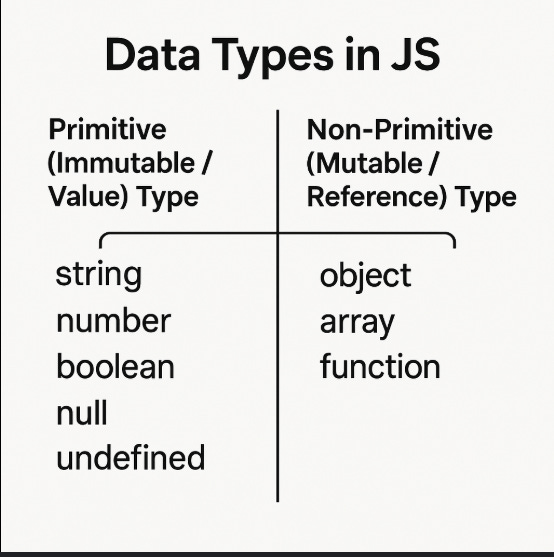
Immutable data means that once created, the data cannot be changed — instead, you create a new version when you need to update it.
You’re not freezing time. You’re freezing side effects.
🧩 Mutable approach:
const state = { count: 0 };
state.count++;
console.log(state.count); // 1
🧩 Immutable approach:
const state = { count: 0 };
const newState = { ...state, count: state.count + 1 };
console.log(newState.count); // 1
console.log(state.count);    // 0
✅ The original state remains intact.
✅ The new version clearly shows a change.
🧰 4. The Tools of Immutability
There are multiple ways to enforce or simplify immutable behavior in JavaScript.
🧱 A. Spread Operator (...)
Your go-to weapon for shallow copies.
const user = { name: ‘Alex’, city: ‘Warsaw’ };
const updated = { ...user, city: ‘Gdańsk’ };
✅ Creates a new object
✅ Copies all properties
✅ Allows selective overwrites
⚠️ But careful:
It only performs a shallow copy, not a deep one.
const user = { name: ‘Alex’, address: { city: ‘Warsaw’ } };
const updated = { ...user };
updated.address.city = ‘Gdańsk’;

console.log(user.address.city); // ‘Gdańsk’ 😬
Still mutates the nested object.
🧊 B. Object.freeze()
A built-in method that prevents modification of properties.
const config = Object.freeze({
  theme: ‘light’,
  version: 1
});

config.theme = ‘dark’;
console.log(config.theme); // ‘light’
⚠️ Note: Object.freeze() is shallow too.
Nested objects can still be changed unless you recursively freeze them.
🌳 C. Deep Copy (Manual or via Libraries)
To make a fully independent clone:
const deepClone = JSON.parse(JSON.stringify(obj));✅ Works fine for pure data objects.
⚠️ Breaks if your object contains:
Functions
Dates
Undefined values
For complex structures, use utilities like Lodash’s cloneDeep().
💫 D. Immer — The Practical Way
Modern frameworks often use Immer, a tiny library that allows you to write mutable-looking code while keeping everything immutable under the hood.
import { produce } from “immer”;

const state = { user: { name: “Alex”, age: 28 } };

const nextState = produce(state, (draft) => {
  draft.user.age = 29;
});

console.log(state.user.age);     // 28
console.log(nextState.user.age); // 29
You write mutations. Immer records and replays them immutably.
It’s used internally by Redux Toolkit, React state helpers, and many other frameworks.
🧩 5. Real-World Example — React State Update

Consider this React pattern:
const [user, setUser] = useState({ name: ‘Alex’, age: 28 });

function increaseAge() {
  user.age += 1; // ❌ mutating directly
  setUser(user);
}
React doesn’t detect this change, because the object’s reference didn’t change.
So your component might not re-render at all.
✅ Correct way:
function increaseAge() {
  setUser({ ...user, age: user.age + 1 });
}
Now React sees a new object reference → triggers a re-render → UI updates predictably.
⚡ 6. Why Immutability Improves Performance
At first it seems like immutability creates more objects — but it actually makes life easier for frameworks and developers.
✅ Faster change detection — comparing references (
===) is cheaper than deep comparisons✅ Predictable state — no hidden side effects
✅ Easier debugging — time-travel debugging, undo/redo
✅ Safer concurrency — avoids shared-state conflicts
Once your team commits to immutability, debugging drops dramatically. You can trace the entire history of state changes just by comparing snapshots — no need to hunt down who modified what.
🧠 7. Interview Perspective
You’ll often get this question:
“Why does React (or Redux) care about immutability?”
Here’s the perfect answer 👇
Because React compares references, not deep object values.
If you mutate data directly, React doesn’t detect a change, so it won’t re-render.
Follow-up question:
“How can you make sure state updates immutably?”
Answer:
Use the spread operator, Immer, or functional updates — always return a new object instead of mutating the old one.
🔥 8. Final Thoughts — Think Like a Historian
Every time you change data, ask yourself:
“Will I ever need to know what it looked like before?”
If the answer is yes — you should keep it immutable.
Think of immutability like a timeline: every change adds a new snapshot, never erasing the past. That’s how undo works, how debugging tools rewind, and how React knows what to update.
Code that mutates recklessly might feel fast — until it breaks silently.
Code that treats state immutably might seem verbose — until it saves you hours of debugging.
💡 Key Takeaway
Immutability isn’t about writing more code — it’s about avoiding hidden changes that make bugs hard to track.
Once you understand that every object is just a reference,
immutability stops being a buzzword — and becomes your first line of defense against chaos.
structuredClone() was available more than 3 years ago, but you forgot to mention it. You could also use Object.assign for shallow copy.
Such an important topic immutability feels subtle until a tiny mutation breaks something miles away in the app.